What Are Jute Rugs? Pros, Cons, and Where They Work Best?
Jute rugs are one of the most popular eco-friendly rug choices for modern homes, known for their natural texture, sustainability, and timeless appeal. Made from natural plant fibers, jute area rugs add warmth and organic character while aligning with conscious, low-impact living.
If you’re considering a jute rug for your living room, bedroom, or home office, it’s important to understand both its benefits and limitations. This guide breaks down what jute rugs are, their pros and cons, where they work best, and how to care for them, so you can decide if they’re the right fit for your home.
What is Jute?
Jute is a natural plant fiber derived from the jute plant which grows mainly in India and Bangladesh. Jute stands as one of the most sustainable fibers because it possesses biodegradable and renewable and environmentally friendly characteristics. Jute has been traditionally used for ropes and bags and mats because of its strong and versatile nature.
What Are Jute Rugs?
Jute rugs are floor coverings made by spinning jute fibers into thick strands and handweaving them into rugs. The rugs receive their value from their natural texture and neutral tones and organic appearance. Jute stands as an eco-friendly rug material because it exists as a biodegradable and renewable resource.
At Crafted By Her, jute rugs are handcrafted using traditional weaving techniques that highlight true artisanal skill. Each rug features subtle variations in weave and tone, giving every piece a distinct, one-of-a-kind character that synthetic rugs can’t replicate.
Jute grows quickly, absorbs carbon dioxide efficiently, and requires minimal pesticides. Because it is biodegradable, jute does not contribute to long-term landfill waste.
2. Natural Texture and Aesthetic Appeal
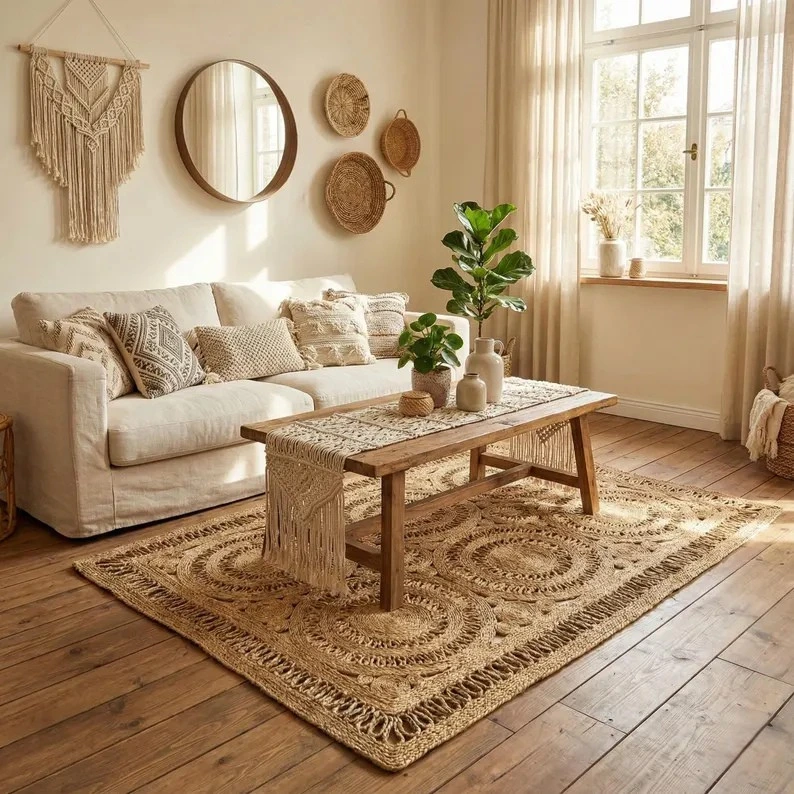
Jute rugs add warmth and organic texture to a room without visual clutter. Their handcrafted look pairs beautifully with wood, linen, and neutral color palettes.
3. Durable for Low-Traffic Areas
Jute fibers are strong and hold their structure well in controlled environments. They age gracefully when used in bedrooms, living rooms, and home offices.
4. Versatile Styling Option
Jute rugs work well as standalone pieces or as base rugs for layering. They adapt easily to changing décor styles over time.
Cons of Jute Rugs
1. Sensitive to Moisture
Jute absorbs water easily, which can lead to staining or mildew. These rugs are not suitable for bathrooms, basements, or damp spaces.
2. Rougher Texture Underfoot
Jute feels firmer than wool or cotton rugs. Layering with a softer rug can improve comfort in lounging areas.
3. Limited Stain Resistance
Jute fibers stain easily from oils, wine, or colored liquids. Immediate spot cleaning is essential to prevent permanent marks.
4. Not Ideal for High-Traffic Areas
Constant foot traffic can cause faster wear. Jute performs best in low to moderate traffic spaces.
Where Jute Rugs Work Best in the Home
1. Living Rooms and Sitting Areas
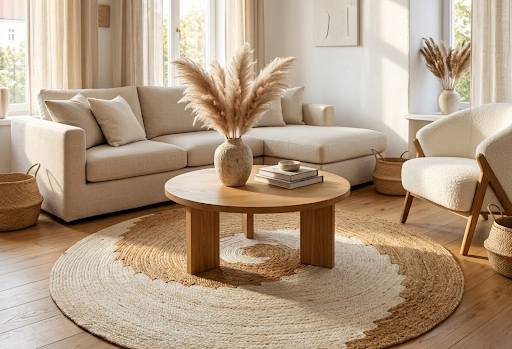
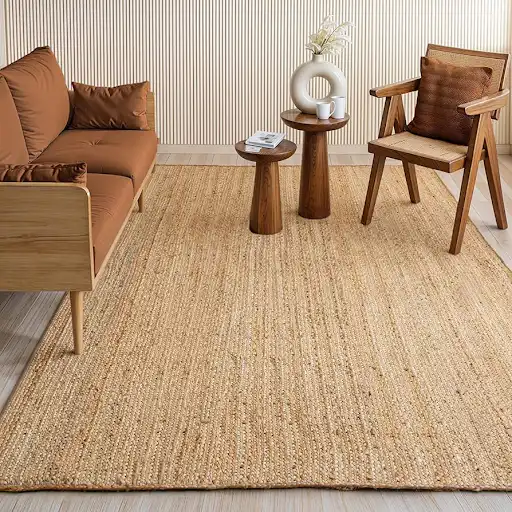
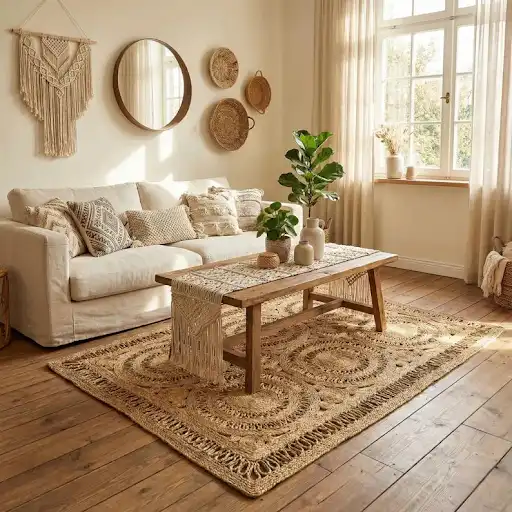
Jute rugs work exceptionally well in living rooms with moderate foot traffic. They anchor furniture beautifully and add texture without overpowering the décor. In open-plan spaces, they help define seating areas naturally. For extra comfort, many US homeowners layer jute rugs with patterned or wool rugs on top.
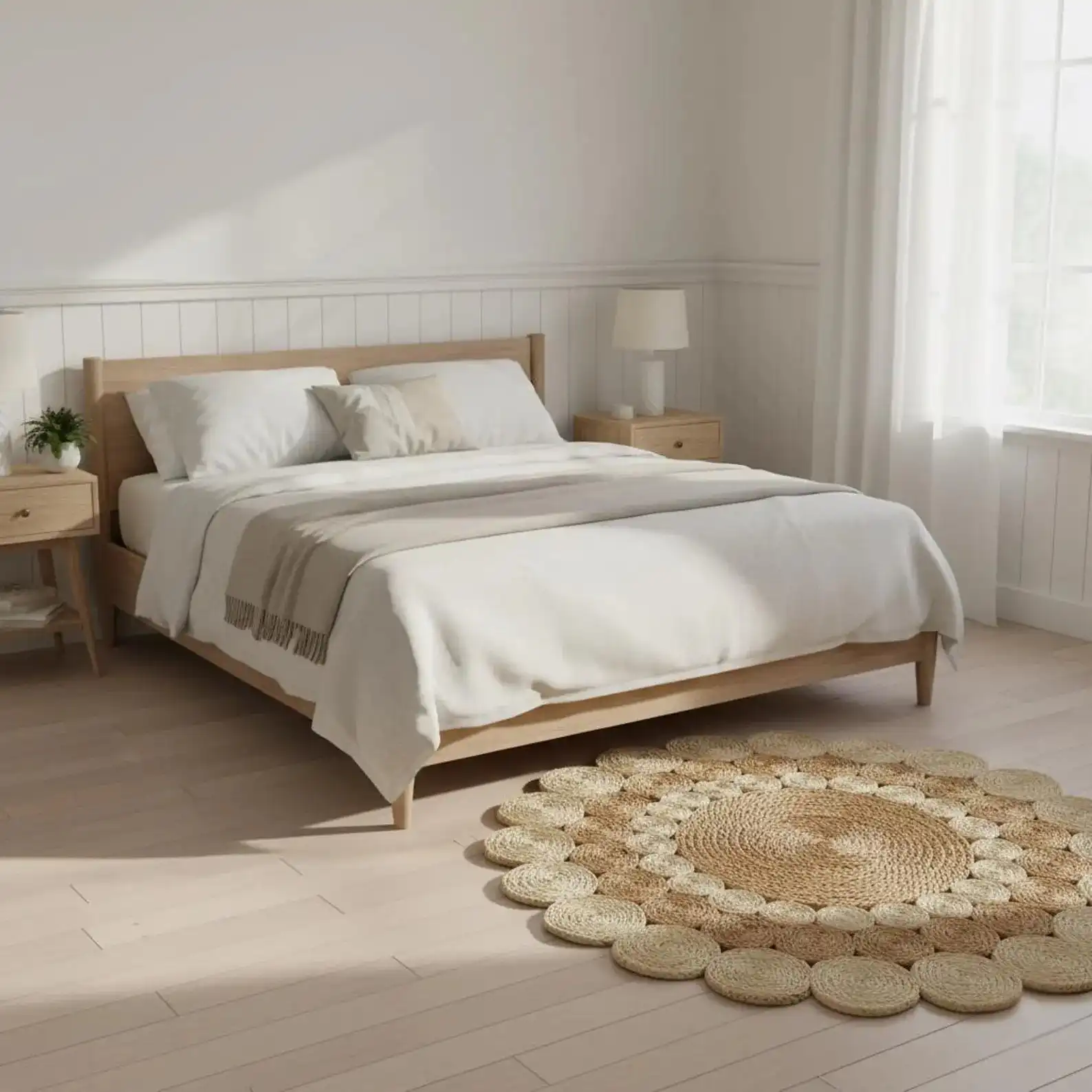
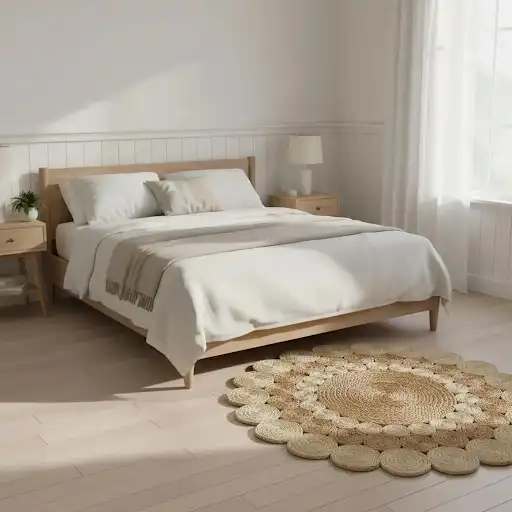
Bedrooms benefit from the calming, natural feel of jute rugs. Placed under the bed, they add warmth and visual balance to the room. Home offices also benefit from jute’s neutral aesthetic and low-maintenance appeal. These spaces usually have controlled movement, making them ideal for jute.
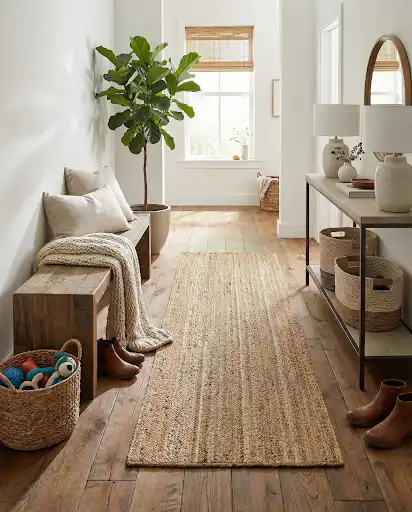
In dry regions like California or Arizona, jute rugs can work well in entryways. They create a welcoming, organic first impression without overwhelming the space. However, they should be kept away from rain or snow exposure. A covered entryway with low moisture is the safest option.
Proper care helps jute rugs maintain their natural texture and appearance over time. Regular cleaning and mindful placement can significantly extend the life of a jute rug.
Avoid water completely: Water damages jute fibers and can cause staining or mildew. Never steam clean or soak a jute rug.
Blot spills immediately: Use a dry cloth or paper towel to absorb spills before they sink into the fibers. Dry the area with a hairdryer if needed.
Remove solid debris gently: Scrape solids carefully with a blunt knife, then vacuum using a soft brush attachment.
Vacuum regularly:Vacuum at least twice a week to prevent dirt buildup and fiber breakage.
Deodorize naturally: Sprinkle baking soda over the rug overnight, then vacuum to eliminate odors.
Use a jute sealer: A jute sealer can reduce absorbency and buy time for spill cleanup.
How Jute Rugs Compare to Other Natural Fiber Rugs
Jute rugs are often compared to sisal and seagrass rugs. Jute is softer than sisal but less durable in high-traffic areas. Compared to Seagrass, jute offers a warmer, more handmade appearance but less moisture resistance. For homeowners prioritizing comfort and aesthetics over heavy-duty durability, jute is often the preferred choice.
Are Jute Rugs Right for You?
If you value sustainability, handcrafted quality, and timeless design, jute rugs are an excellent choice. They are best suited for low-traffic, dry areas where their beauty can shine without excessive wear. Understanding their limitations helps ensure long-term satisfaction.
Crafted By Her’s handcrafted jute rugs are designed for conscious homeowners who appreciate natural materials and artisan craftsmanship.
Frequently Asked Questions About Jute Rugs
1. What are jute rugs made of?
Jute rugs are made from natural plant fibers harvested from the jute plant. The fibers are spun and handwoven into durable, textured rugs.
2. Are jute rugs good for living rooms?
Yes, jute rugs work well in living rooms with moderate foot traffic. They add warmth and texture while maintaining a clean, natural look.
3. Do jute rugs shed?
Some light shedding is normal at first, especially with new rugs. Regular vacuuming helps minimize loose fibers over time.
4. How do you clean a jute rug?
Vacuum regularly and blot spills immediately with a dry cloth. Avoid water, steam cleaning, or harsh chemicals.
5. Are jute rugs eco-friendly?
Yes, jute rugs are biodegradable, renewable, and made from one of the most sustainable natural fibers available.
Looking to add natural texture and sustainable style to your home?
Explore Crafted By Her’s handcrafted jute rugs, thoughtfully woven for conscious, modern living.
Choosing the right rug shape can completely change how your room looks and feels. When comparing round vs rectangular jute rugs, the decision goes beyond...
Checkered jute rugs combine geometric structure with natural texture. They bring order to open spaces while preserving the warmth of organic fiber. Patterned jute rugs...
Two tone jute rugs are among the most versatile natural flooring options in modern homes. They combine organic warmth with subtle contrast, making them ideal...
Every beautiful and well-designed living room begins with a strong foundation. Before choosing furniture, lighting, artwork, or decorative accents, the right rug can help define...


 24Feb
24Feb